ISSUE 018 2026.08.16
How to Train Your Brain to Crave Doing Hard Things
You know exactly what you should be doing. Learn the skill, work on the project, have some level of patience, persistence and iteration. But you’re still not doing any of it.
Before we move on, I just want to make it clear that there is nothing wrong with you. Your brain is literally designed to resist effort.
In this article, I will explain how your brain actually works and three ways to fix it.
Why do we struggle with hard tasks?
It’s very simple. It’s because we don’t want to do it. Why would you want to do something that is hard? The secret is to design tasks (your work) in a way that your brain actually wants to do it.
“Whatever the mind can conceive and believe, it can achieve.”
In order to do this we need to understand how your brain handles hard tasks. There are two systems for this:
- Basal Ganglia
This is the part of your brain that handles all of the automatic behaviours. For example, brushing your teeth.
- Prefrontal Cortex
This part of your brain is responsible for all the actions that require conscious deicison making and effort. For example, learning a new skill, writing an essay, working on a project etc.
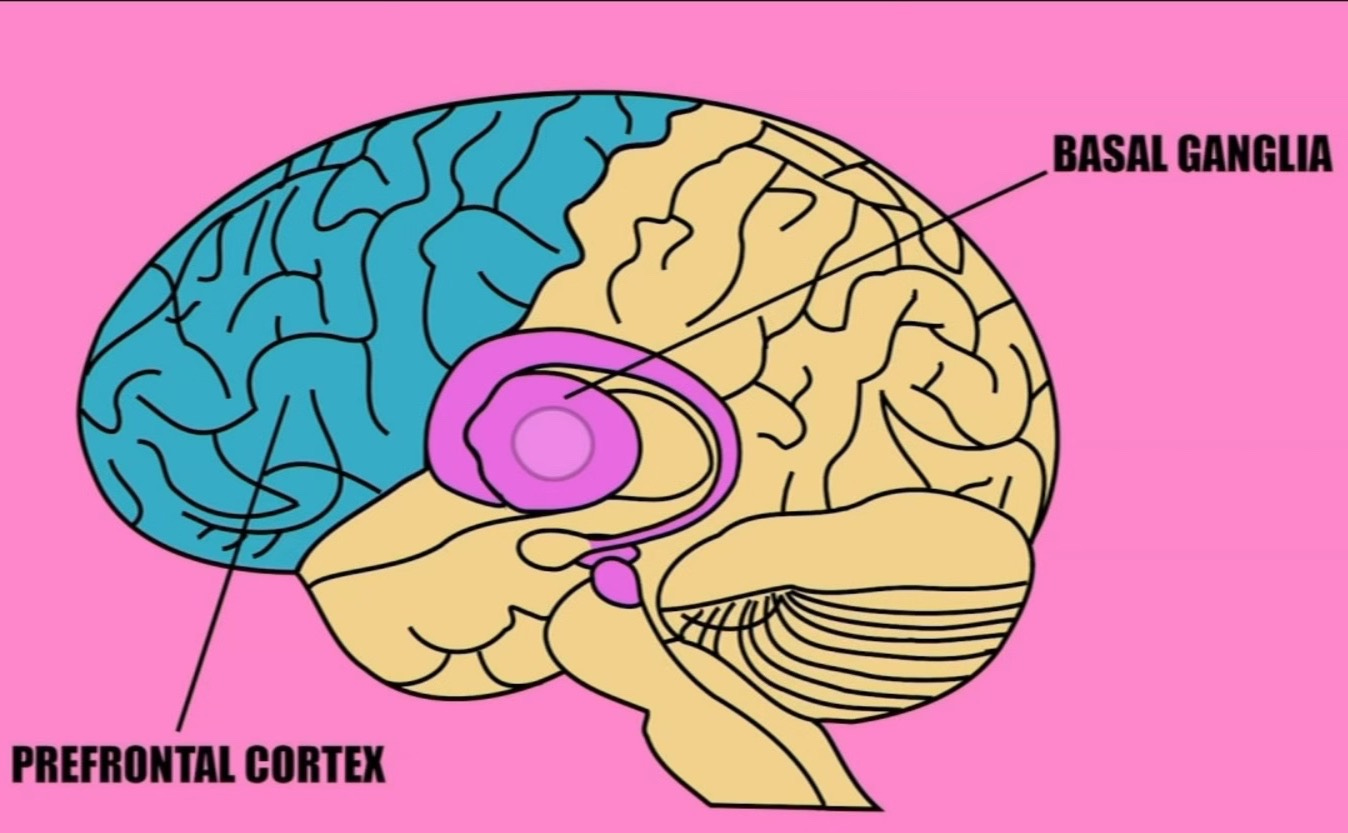
Your brain doesn’t want to use the prefrontal cortex too much because if it stays on for too long it causes mental exhaustion. It’s interesting how this all works. It makes total sense. Everytime you want to do something, your brain does a benefit calculation. It analyses the reward for doing the task and whether it’s worth the effort.
Let’s look into the model that explains what we’re talking about here.
The Fogg Behaviour Model
On the left side, you have motivation. This is driven by perceived reward. At the bottom, you have ability, which is driven by perceived effort.
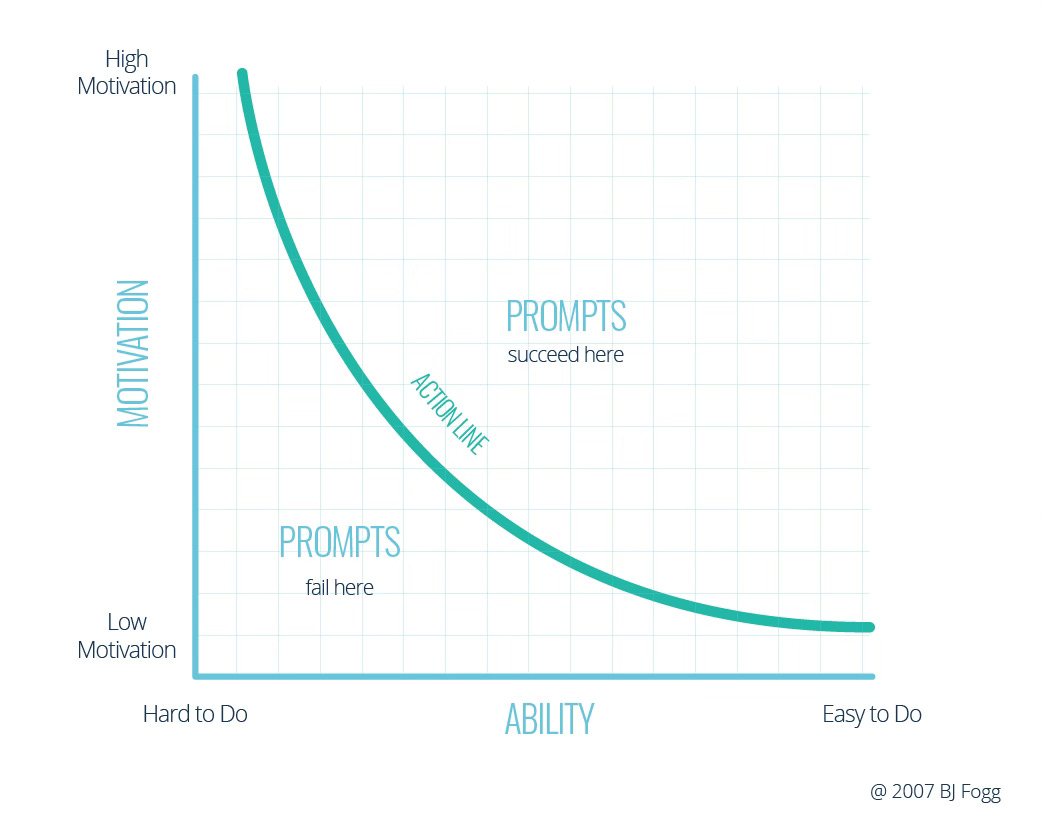
If the reward exceeds the effort for a specific type of task your brain says yes and you do it easily. But if effort exceeds the reward, your brain says no and you feel resistance.
Do you now understand why scrolling on TikTok is easy? Because there is zero effort and immediate reward. Your brain isn’t going to say no to an offer like that. But if you were to read a book, that would require a lot of effort and distant reward because you’re not going to feel the benefits of reading immeditely.
Here’s the takeaway:
You can’t control how much immediate reward a task is going to give you, but you can easily control how much effort it requires by intelligently designing your tasks.
There are three factors you can control when designing tasks: the size, feeling, and committment/duration of the task.
- Design the size of the task
Make every step of the task small so that it feels achieveable.
Writing online and the process of creating long-form video content on YouTube (through storytelling) is completely new to me. It’s a big task. I started off on social media making memes (yes, it’s not a lie). Just search me up on TikTok.
So, this goal of mastering writing and storytelling isn’t an easy job for me. And what I ultimately did to make it easy was break it into smaller steps.
Step one, open the computer. Step two, open a Word doc. Step three, write titles that have potential (ones that people are actually interested in). Step four, find resources on the topic as research via articles, podcasts and long-form media. Step five, write. Etc.
If you’re interested in this transition and how I grow on social media through writing and storytelling I’ve got a free in-depth guide that goes into my decade worth of experience of creating online.
Totally free. Grab it here: https://stan.store/SerkanKozkiran/p/cbf
Back to topic. Think about how addictive video games are. It’s because video game designers understand human psychology more than anyone else.
You will never fight a final boss at level one. Designers will cut the game to small achieveable chunks. Everytime you complete a small part of the game, you move to the next part of the game. This gives the player a sense of accomplishment and the drive to keep going. Believe it or not, it’s how certain people accomplish extreme things.
Stop thinking about the finish line. Focus on one simple step at a time. That will give you the sense of accomplishment (reward/dopamine) to do the next one.
- Design The Feeling To The task
Everyone hates school. And everyone who comes after us will hate school if the education system stays the way it is. This collective hatred isn’t random by the way. We hate it because we have very little control over choosing what we want to learn.
So, think about the feeling the task gives you. Do you see the task as an obligation or a choice? One is mandatory, the other is personal. It’s not “I have to do it”, but more “I choose to do it”. Same task, different feelings.
This can go for everything. When you feel like you’re choosing, you engage more deeply with it, persist longer, and actually enjoy doing the task more. But as soon as you force something you will immediately come across resistance.
A great example is my Substack. I don’t need to write on Substack. I choose to. This is a conscious decision I’ve made.
Your brain doesn’t resist hard work. It resists work that feels imposed.
- Design The Commitment & Duration Of The Task
When you’re learning a new skill, you feel a sense of excitment at the beginning but as time goes on the excitment wears off and so does your level of committment to the task. Your to-do list builds more and more and it all just becomes a heavy load.
But the goal isn’t to succeed. The goal is to experiment. But more importantly committing to and conpleting the task. In other words, commit to the experience.
We might only live once. Or we might have multiples lives. Who knows. What I do know is that you don’t take anything from this life on to the next. At least nothing material. Actually one of my weird beliefs is that if we do carry anyting forwatd, it’s experience, to whatever comes after life.
My point is that experience and committment work together. To actually experience one desire to its fullest, you need some level of committment. Whatever endeavour it is you’re working on, make it short and achievable. Don’t exercise everday until the end of the year, do it three times a week.
The one true goal is to teach your own brain that you’re actually the person that follows through.
My committment is to write one newsletter a week until 2027. To essentially become a better writer and storyteller.
Remember. Hard things do not become easy because you force yourself to do them, they become easy because you designed the right conditons for your brain to operate.
That’s all for this week.
Thank you for tuning in!
Here’s a free resource you can check out next: https://stan.store/SerkanKozkiran/p/cbf
-Serkan